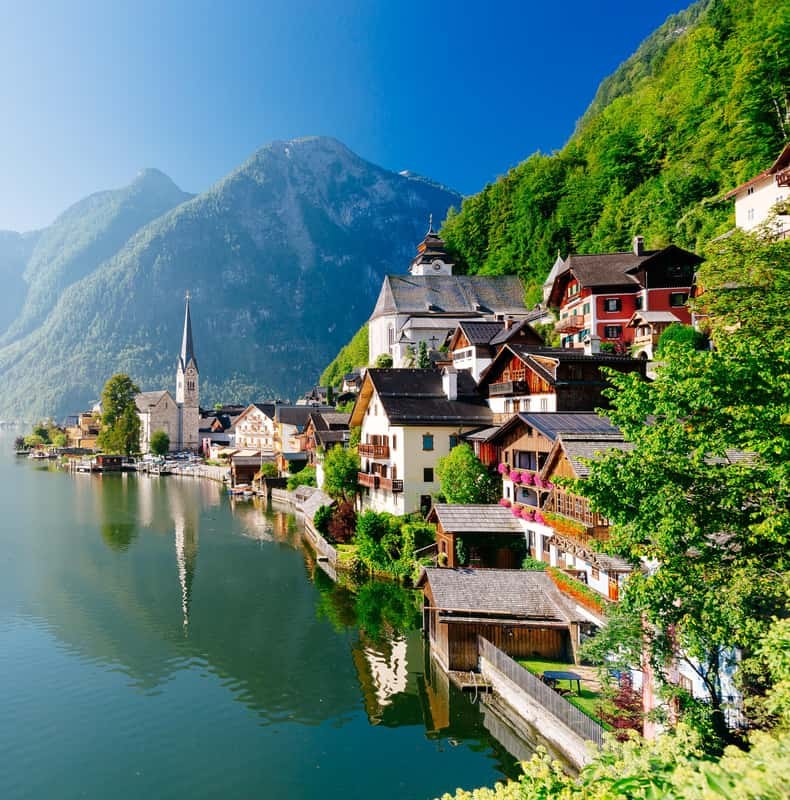
From Vienna: Day Trip to Hallstatt & Salzkammergut incl Boat
Thirteen hours from Vienna: an hour's guided walk, then the 25-minute crossing of the lake, in the fare from April to October. Bring ID.
From $111 per person
Check AvailabilityThe best time to visit Hallstatt is late spring, or September and early October. The month decides less about the weather than about what is open: the lake boat, the mine hours, the Bone House days. If you are choosing Hallstatt tickets for set dates, start with what runs.
The village never closes. You can walk the Marktplatz and the lakeshore on any day of the year. What the season changes is what you can add to the walk.
The lake round trip sails only from the end of May to September. The Bone House opens every day from April to October, and only Wednesday to Sunday the rest of the year. The salt mine and the funicular shorten their hours from 25 October, and their published season ends on 6 January 2027.
The coaches do not stop for winter either. What thins them is the hour of the day, not the month: they come for a fixed slot and leave again.
The figures below are GeoSphere Austria's 1991 to 2020 normals for Bad Aussee, the nearest station with published normals, about 15 km away and some 150 m higher. They are averages, not a forecast.
Bad Aussee averages −2.1 °C, 113 mm of rain and 76 hours of sun. The salt mine and the funicular keep winter hours until 6 January 2027, the last day of their published season. The Bone House opens Wednesday to Sunday, 11:30 to 15:30. Pack for ice on the lanes.
Bad Aussee averages −0.6 °C, 94 mm of rain and 100 hours of sun. Check Salzwelten for the mine's 2027 opening before you plan on it. The museum opens daily from 11:00 to 16:00, and the station ferry still meets every train.
Bad Aussee averages 3.2 °C, 129 mm of rain and 133 hours of sun. Sunshine climbs by a third on February. The Bone House keeps its winter days, Wednesday to Sunday, until the end of the month. The lake palace at Gmunden opened on 27 March in 2026.
Bad Aussee averages 8.0 °C, 85 mm of rain and 167 hours of sun. The driest month of the year. The Bone House opens daily from 1 April, and the Vienna day with the lake crossing starts sailing on the same date.
Bad Aussee averages 12.8 °C, 137 mm of rain and 182 hours of sun. The cable cars and caves on the Krippenstein open on 1 May. The museum opens to 18:00, and the lake round trip starts at the end of the month. Corpus Christi falls on 27 May in 2027.
Bad Aussee averages 16.3 °C, 167 mm of rain and 188 hours of sun. The Bone House opens from 10:00 to 18:00 every day. The lake boat sails four times a day from the landing in the village, and the days are the longest of the year.
Bad Aussee averages 17.8 °C, 195 mm of rain and 200 hours of sun. The warmest month here, and the wettest. The lake round trip adds a 16:00 sailing in July and August. Carry a rain jacket, and book any day tour early.
Bad Aussee averages 17.4 °C, 166 mm of rain and 203 hours of sun. The sunniest month of the year. The rebuilt funicular to the platform reopened on 29 August 2026. Go up early, before the day's coaches arrive, and keep the afternoon for the lake.
Bad Aussee averages 12.9 °C, 142 mm of rain and 151 hours of sun. The last month of the lake round trip's season. The Bone House and the museum keep their long summer hours to the end of the month, and the heat has gone.
Bad Aussee averages 8.4 °C, 111 mm of rain and 133 hours of sun. The mine closes earlier from 25 October, at 15:00, and the funicular at 16:30. The Vienna day's lake crossing ends on 31 October, and the Bone House closes at 17:00.
Bad Aussee averages 3.3 °C, 96 mm of rain and 82 hours of sun. The Bone House goes back to Wednesday to Sunday. The Krippenstein season ends on 1 November, and the Vienna boat day takes you into the Bone House instead.
Bad Aussee averages −1.1 °C, 119 mm of rain and 58 hours of sun. The least sunshine of the year. Advent brings a Christmas market to the village; check this year's dates with the tourist board. The mine and the funicular stay open on winter hours.
One Vienna day includes a crossing on the lake in those months. Compare it with the other Vienna days.
Here are the same normals in one table. July is the wettest month and April the driest; December has the least sun.
| Month | Mean °C | Rain mm | Sun hours |
|---|---|---|---|
| Jan | −2.1 | 113 | 76 |
| Feb | −0.6 | 94 | 100 |
| Mar | 3.2 | 129 | 133 |
| Apr | 8.0 | 85 | 167 |
| May | 12.8 | 137 | 182 |
| Jun | 16.3 | 167 | 188 |
| Jul | 17.8 | 195 | 200 |
| Aug | 17.4 | 166 | 203 |
| Sep | 12.9 | 142 | 151 |
| Oct | 8.4 | 111 | 133 |
| Nov | 3.3 | 96 | 82 |
| Dec | −1.1 | 119 | 58 |
Summer rain comes in heavy showers, so a wet forecast rarely means a whole lost day. In winter, expect frost on the lanes from December to February.
These are the dates each sight runs to in 2026, from each operator's own page. Check yours against them before you book.
| What | Season | Hours |
|---|---|---|
| The salt mine | Open now to 6 January 2027 | 09:30-16:30 to 24 Oct; 09:30-15:00 from 25 Oct |
| The funicular and the platform | Reopened 29 August 2026, to 6 January 2027 | 09:00-18:00 to 24 Oct; 09:00-16:30 from 25 Oct |
| The lake round trip | End of May to September | 11:00, 13:00, 14:00, 15:00; 16:00 in July and August |
| The lake crossing on the Vienna boat day | 1 April to 31 October 2026 | The charnel house instead in winter |
| The charnel house | All year | Daily Apr-Oct; Wed-Sun Nov-Mar |
| Museum Hallstatt | All year | 10:00-18:00 May-Sep; shorter the rest of the year |
| The station ferry | All year | Meets the trains |
| Krippenstein cable cars and caves | 1 May to 1 November 2026 | First ascent 08:40 |
The Hallstatt Salt Mine is the one to plan around. Its season ends on 6 January 2027, and the 2027 reopening was not on Salzwelten's page when this was written.
Hallstatt has about 740 residents. The municipality has said it sees up to a million visitors a year and up to 10,000 on some days, and it counted over 19,000 coaches in 2018.
Since 1 June 2020 every coach books an entry slot and an exit slot, at least 2 hours 20 minutes apart, and pays €126 for it from 1 May 2026. That rule is why a coach day gives you two to three hours in the village and not more.
If you stay the night, you have the lanes before and after them.
A day from Salzburg is shorter on the road, which matters when the light goes early. Compare the Salzburg tours.
Few dates change a visit, but these do. The procession on Corpus Christi is the one to see: a High Mass at 09:00 in the Catholic church, a blessing on the square, then a procession of boats on the lake, weather permitting.
| Date | What happens | What it changes |
|---|---|---|
| 25 October 2026 | Winter hours start | The mine closes at 15:00 |
| 31 October 2026 | The boat day's crossing ends | Its winter fare swaps in the charnel house |
| 1 November 2026 | The Krippenstein closes; the charnel house opens Wednesday to Sunday | Plan the caves before it |
| Advent | A Christmas market in the village | Check the dates with the tourist board |
| 6 January 2027 | The mine's published season ends | Check the 2027 reopening |
| 27 May 2027 | Corpus Christi and the lake procession | Boats on the lake; a crowded morning |
The Advent market dates change from year to year, so the tourist board's own page is the one to trust for them.
The hour matters as much as the month. Here is how to use a day in the village.
The temperature, rain and sunshine are GeoSphere Austria's 1991 to 2020 normals for Bad Aussee, as published by Land Steiermark, checked 26 September 2026. Each season date is the operator's own. The coach rule and the procession are the village's and the tourist board's.
Thirteen hours from Vienna: an hour's guided walk, then the 25-minute crossing of the lake, in the fare from April to October. Bring ID.
From $111 per person
Check Availability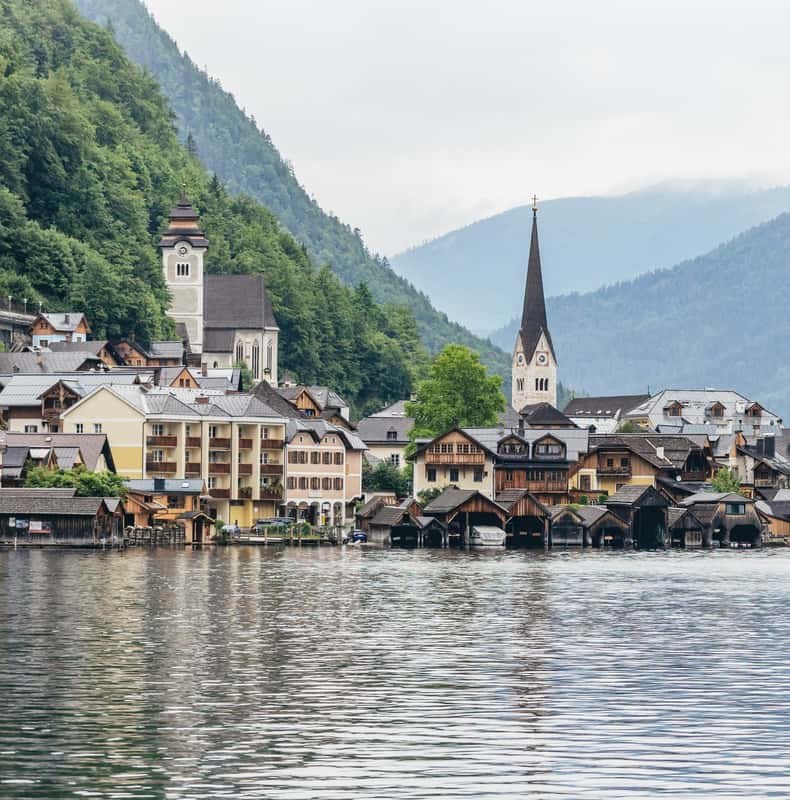
Five and a half hours from Salzburg with a guide on the bus: two and a half hours on your own in the village, a day that fits the short light of winter.
From $96 per person
Check Availability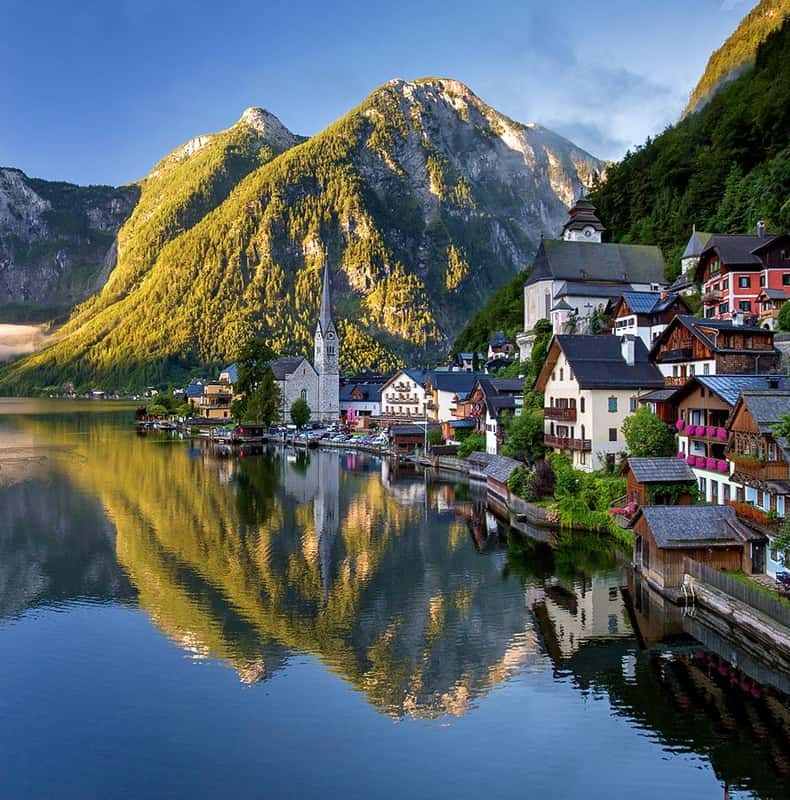
Ten hours from Salzburg: about two hours free in the village, then the film stops on the way home. A guide rides the coach; there is no hotel pickup.
From $159 per person
Check AvailabilityNext: see things to do in Hallstatt, choose a base on where to stay, or compare every tour on Hallstatt Tours.