Surprising Facts About Hallstatt: Salt, Skulls and a Road Only Since 1890
The short answer. Hallstatt was mining salt in the Bronze Age, gave its name to a whole period of European prehistory, burned down in 1750 and had no road until 1890. Its dead were painted and moved to a charnel house, and its square was copied in China. The facts below are the ones that change what you look at when you arrive, and the ones Hallstatt guided tours tell best on the spot.
1. The salt came first, by about three thousand years
UNESCO dates systematic salt production here to the Middle Bronze Age, the late second millennium BC. The village exists because of the mountain above it, and mining never stopped for long. You will see much bigger numbers online; the World Heritage text is the one to trust. The Hallstatt Salt Mine is still open to visitors, reached by the funicular.
2. An age of European history is named after the village
In the 8th century BC, mining resumed on a large scale, and the society that ran it traded across Europe. Archaeologists now call that Iron Age society the Hallstatt Culture, and use the village's name for a whole period, from Austria to France.
3. A mine manager found almost a thousand graves
In November 1846, Johann Georg Ramsauer, who managed the mine, came upon a prehistoric cemetery in the high valley. Between 1846 and 1863 Ramsauer excavated 980 graves, and the finds are why the name stuck. Many are in the Natural History Museum in Vienna; Museum Hallstatt on the lakeshore tells the story in the village for €12.
4. Almost everything you see dates from after a fire
A fire in 1750 destroyed the timber buildings of the village, which was rebuilt in the late Baroque style. So the painted houses on the square are younger than they look, and older than most of what stands in the towns you pass on the way.
5. There was no road until 1890
For most of its history the village was reached by boat or on foot. The first road was only built in 1890, along the west shore, partly by blasting the rock. Until then, the lake was the street, which is why the village faces the water.
6. The dead were dug up and painted
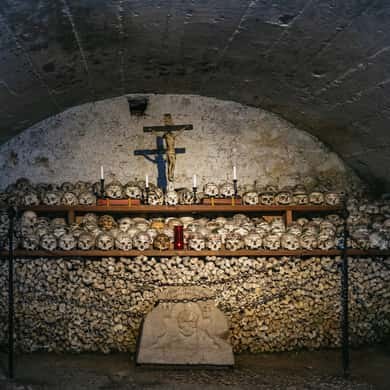
When a grave in the churchyard was reused, the skull was moved to the charnel house as part of a second funeral, and painted, often with a name or initials, so the family could still find it. Most were painted in the late 18th and the 19th century, and a few in the 20th. The Bone House, in a chapel dating back to the 12th century, holds over 600 painted skulls, and you can see them for €2.
7. The station is on the other side of the lake
Trains stop across the water, and a small ferry, the Stefanie, meets them all year for €4 one way. It has done so since 1881. If you arrive by rail, your first view of the village is from the lake.
8. The spire in every photo is Lutheran
The white spire at the water's edge belongs to the Lutheran church, built from 1859 with a 53 m tower. The Catholic parish church, Maria am Berg, is the one up the steps above the square.
9. The square has a double in China
The Marktplatz was copied in a replica village in Guangdong Province, China. The original is much smaller than the crowds on it suggest: you can cross it in a minute.
10. About 740 people live here
The 2021 census counted 732 residents. The municipality has said it receives up to a million visitors a year, and up to 10,000 on some days, which is why the village limits its coaches.
11. Coaches need a booked slot
Since 1 June 2020, every coach books an entry and exit slot at least 2 hours 20 minutes apart, and from May 2026 each slot costs €126. It explains why day trips give you two to three and a half hours, and why Lahn, the coach stop, is so busy at midday.
12. The lake is deeper than it looks
The Hallstätter See sits at 508 m and is up to 125 m deep across 8.55 km². From the platform above the village you can see it end to end.
13. The World Heritage site is far bigger than the village
UNESCO listed the Hallstatt-Dachstein / Salzkammergut Cultural Landscape in 1997. The listing covers the mountains, the lakes and the salt towns around them, not just the village,, so when you look up from the lakeshore at the Dachstein massif, you are looking at part of the same site.
14. The way up the mountain was rebuilt in 2026
The Salzbergbahn funicular reopened on 29 August 2026 after being rebuilt, and it now carries you to the high valley, the mine and the World Heritage Skywalk. The footpath up stays closed for construction, so for now the funicular is the only way. The return ride costs €29, and €14 for children aged 4 to 15. If an older guidebook or a listing tells you it is closed, it is out of date.
The dates at a glance
| When | What happened |
|---|---|
| Late 2nd millennium BC | Systematic salt production begins |
| 8th century BC | Mining resumes; the Iron Age culture that bears the name |
| 1750 | Fire destroys the timber village |
| 1846 to 1863 | 980 prehistoric graves excavated |
| From 1859 | The Lutheran church and its 53 m tower |
| 1881 | The station ferry starts |
| 1890 | The first road |
| 1997 | World Heritage listing |
| 2020 | Coach slots begin |
| 29 August 2026 | The rebuilt funicular reopens |
Where to hear the stories
- The Vienna day with an hour's guided walk starts in the village with a guide.
- The Vienna day with the Skywalk option has a guide on the coach and the platform as an option.
- A Hallstatt walking tour gives you a local guide of your own for the churches and the square.
For the village stretch by stretch, read our walk from south to north. The sights and their prices are on things to do, the dates on the best time to visit, and the practical questions in the FAQ. The visitor guide and the map cover the arrival.
Days that bring the stories to life
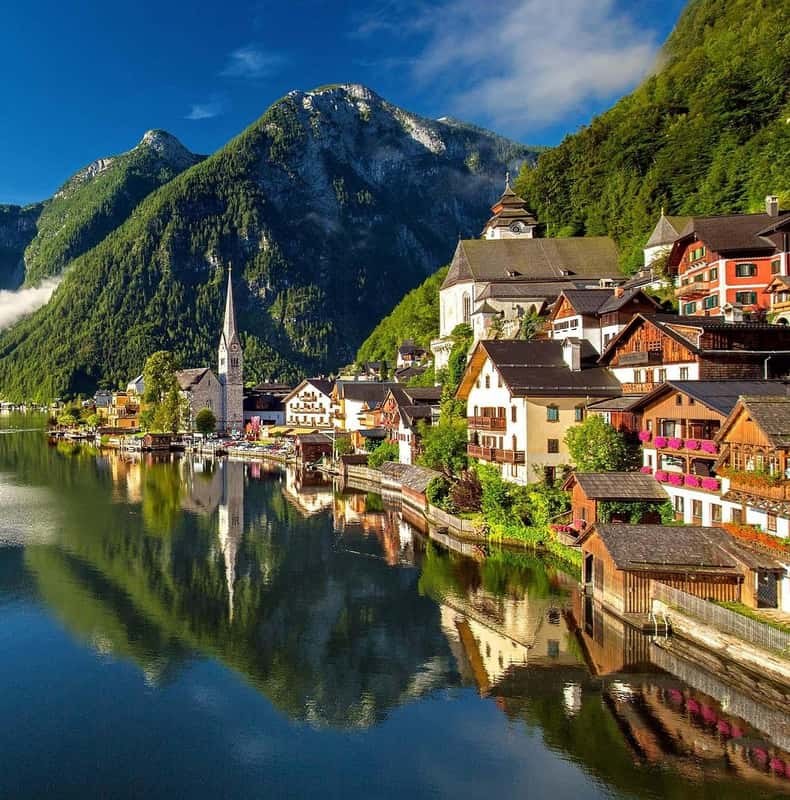
Hallstatt & Ort Castle Premium Day Trip from Vienna
Twelve hours from Vienna with a coordinator rather than a guide: 40 minutes at a lake palace on the Traunsee, then about three hours of free time in the village.
From $76 per person
Check Availability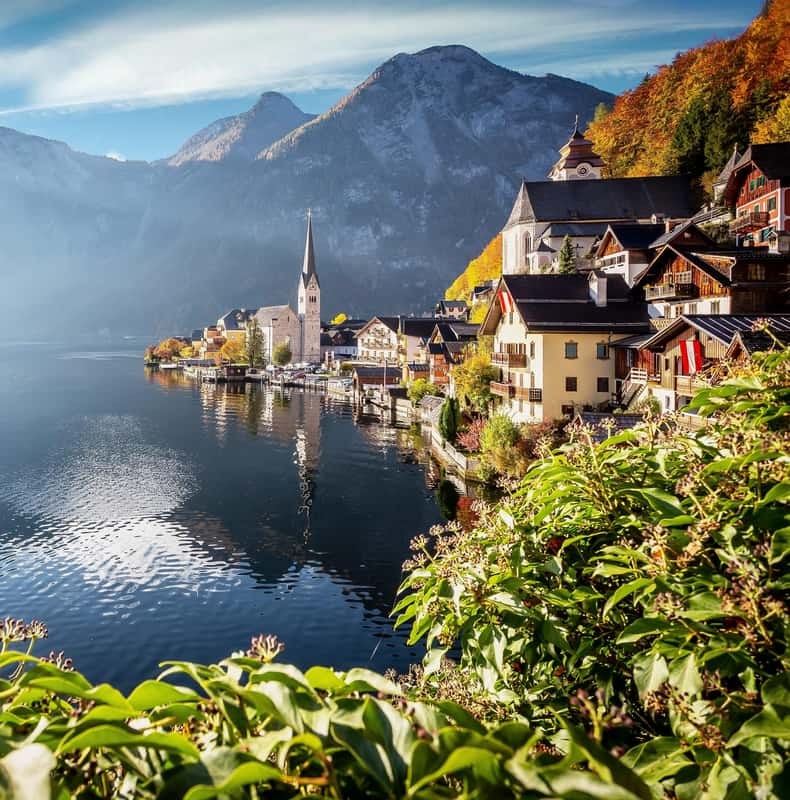
Day trips from Vienna: Hallstatt& Salzburg Scenic Experience
Fourteen hours from Vienna, leaving at 7:00: about two hours in the village and three in Salzburg, with a walk at each stop. The bus waits five minutes at most.
From $114 per person
Check Availability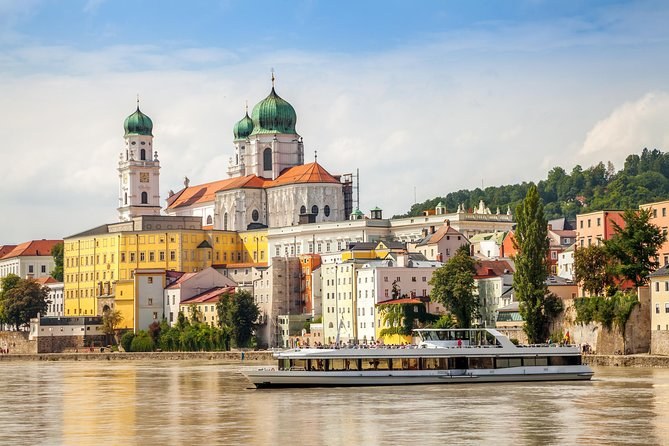
Customized Private Tour to Salzburg for Cruise Guests from Linz or Passau
Nine hours in a private car from your ship at Linz or Passau, for up to seven. The village is one choice among several, with Salzburg and the Eagle's Nest.
From $1,579 per group (up to 7)
Check AvailabilityNext: Read the story first, then stand on the square where it happened. Every fare sits side by side on Hallstatt Tours.